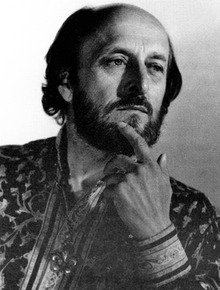
Art Clokey: The Visionary Behind Gumby and the Premavision Legacy
Arthur Charles Clokey (né Farrington; 1921-2010) stands as a monumental figure in the annals of animation history, primarily recognized as the imaginative force behind the beloved green clay character, Gumby, and his trusty sidekick, Pokey. Beyond the whimsical adventures that captivated generations, Clokey was a pioneering animator, director, producer, and screenwriter who almost single-handedly popularized stop-motion clay animation. His enduring influence, entrepreneurial spirit, and the establishment of his Premavision empire raise natural questions about the financial success he garnered from such a profound cultural impact. While exact figures regarding Art Clokey's net worth remain private, an examination of his prolific career, groundbreaking innovations, and the enduring value of his intellectual property reveals the significant commercial and artistic wealth he generated over decades.
Clokey's journey was not merely one of creative genius but also of resilience and innovation, transforming a fledgling experimental film into a global phenomenon. His life story is as rich and multifaceted as the clay figures he brought to life, marked by personal challenges that perhaps fueled his imaginative escapism and a relentless drive to create.
From Personal Turmoil to Pioneering Claymation
Art Clokey's early life was fraught with challenges that undoubtedly shaped his unique perspective and artistic inclinations. Born in Detroit in 1921, Arthur Charles Farrington experienced the trauma of his parents' divorce at age eight, followed by the tragic death of his father in an automobile accident a year later. Rejoining his mother in California, he was later banished by her new husband, finding himself in a children's home. It was at age eleven that his life took a transformative turn when he was adopted by Joseph Waddell Clokey, a renowned composer of sacred and secular music.
This new environment provided stability and exposure to the arts, fostering Clokey's nascent creative spirit. His education at The Webb Schools exposed him to the influence of teacher Ray Alf, who encouraged exploration and discovery, particularly in geology – a subject Clokey later studied at Pomona College. These formative experiences, from personal loss to intellectual curiosity and artistic mentorship, laid the groundwork for a career dedicated to bringing abstract ideas and tangible forms to life.
Clokey's academic path continued at Miami University, his adoptive father's alma mater, after serving as a reconnaissance photographer in the Air Corps during World War II. It was at the University of Southern California (USC) that his artistic vision truly coalesced. Under the tutelage of Slavko Vorkapich, an influential film professor, Clokey produced a groundbreaking film experiment in 1953 titled Gumbasia. This abstract, kinetic clay animation short, inspired by Vorkapich's theories on montage and visual music, became the catalyst for his most famous creation. It wasn't just a film; it was a demonstration of a new art form and paved the way for the popularization of stop-motion animation. To delve deeper into this foundational period, explore Pioneering Claymation: Art Clokey's Path to Animation Success.
The Birth of Gumby and the Premavision Empire
Following the success of Gumbasia, Art Clokey and his wife, Ruth, conceived the iconic character Gumby and his horse, Pokey. Their distinct design and flexible nature made them perfect for clay animation, offering endless possibilities for imaginative storytelling. Gumby and Pokey first graced American television screens on The Howdy Doody Show, instantly capturing the hearts of young audiences. Their popularity quickly led to their own series, The Adventures of Gumby, which cemented their status as household names.
This initial success was just the beginning of what would become the Premavision empire. Recognizing the immense potential of his creations, Clokey founded Premavision, a company dedicated to producing and managing the Gumby and Pokey franchise. This foresight in establishing his own production entity was crucial, allowing him to retain significant control over his intellectual property and its merchandising. Premavision later included a manufacturing subsidiary, Prema Toy Company, further expanding the brand's reach into physical products, from bendable toys to apparel, comics, and games.
The Enduring Value of Intellectual Property
The strategic establishment of Premavision highlights a key component of Art Clokey's net worth: the ownership of his intellectual property (IP). Unlike many creators who licensed away their rights for upfront fees, Clokey maintained control, ensuring that the long-term revenue streams from syndication, merchandising, and future projects would flow back into his company. This move proved exceptionally prescient, especially with the unexpected revival of Gumby's popularity in the 1980s. American actor and comedian Eddie Murphy's memorable parodies of Gumby on Saturday Night Live introduced the character to a new generation, sparking renewed interest and significantly increasing the franchise's commercial value. This resurgence led to new productions, merchandise, and a reinforced legacy that continued to generate revenue for Premavision for decades.
Beyond Gumby: Davey and Goliath and Other Ventures
While Gumby remained his most famous creation, Art Clokey's creative output extended to other significant projects, further diversifying his portfolio and demonstrating his range as an animator and storyteller. His second-most renowned production was Davey and Goliath, a stop-motion series funded by the Lutheran Church in America (now the Evangelical Lutheran Church in America). This collaboration showcased Clokey's ability to adapt his unique animation style to educational and morally driven content, reaching a different audience with messages of kindness, compassion, and understanding.
The funding model for Davey and Goliath illustrates another aspect of Clokey's business acumen – securing external financing for projects that aligned with specific institutional goals. While perhaps not as direct a contributor to his personal net worth as Gumby's commercial ventures, it solidified Premavision's reputation and provided consistent work for his animation studio, contributing to the overall stability and long-term viability of his creative enterprise.
Clokey also continued to experiment with the medium throughout his career, creating visually inventive short clay animation films for adult audiences, like the aforementioned Gumbasia. These experimental pieces underscore his commitment to the artistic potential of claymation, proving it was not just for children but a versatile medium capable of profound expression. This dedication to the art form itself, rather than solely commercial pursuits, defined his unique contribution to animation.
The Legacy and Indeterminable Net Worth of a Creative Pioneer
Assessing the precise Art Clokey net worth is challenging, as financial details of private individuals, especially those who have passed, are rarely made public. However, we can confidently assert that Clokey built a significant legacy, both artistically and commercially. His wealth was not just in monetary terms but in the cultural capital he amassed, the enduring affection for his characters, and the lasting impact he had on the animation industry.
The continuous syndication of The Adventures of Gumby, the licensing of characters for new merchandise, and the periodic re-releases of his works ensured a steady stream of revenue for Premavision. The company, under the continued stewardship of his family, carries on his legacy, managing the rights and future development of the Gumby universe. This ongoing economic activity, stemming from intellectual property created over half a century ago, is a testament to the immense value Art Clokey generated.
From a challenging childhood to becoming a celebrated artist and entrepreneur, Art Clokey's life was a testament to creativity, perseverance, and the power of imagination. He didn't just create characters; he pioneered an art form and built an empire around it, leaving an indelible mark on popular culture and the world of animation. His true legacy lies not just in a financial figure, but in the countless smiles his characters brought, the animators he inspired, and the innovative techniques he introduced to the world. For more on his lasting influence, read Art Clokey's Legacy: The Enduring Value of Gumby and Pokey.
